
Just One Body · New Ross
Better Bone Health Programme
A supervised referral pathway for GPs and personal trainers
A clear place to send patients and clients who need exercise tailored to bone health, with assessment, close supervision and progress reviews.
Why general exercise advice can be hard to act on
Being told to exercise is only the beginning. People still need to know what is suitable for them and how to progress.
After a DXA result, a fracture or a discussion about fracture risk, patients may have practical questions: Which exercises should I do? How much weight can I lift? Is impact appropriate? A general class can be useful, but it is not designed to assess where each person is starting from or account for the risks that may affect their training.
For a GP or personal trainer, the gap is finding a place that can turn bone health advice into a supervised plan with clear reviews.
What the programme does
Assessment shapes the starting point. Close supervision helps each participant learn, progress and work towards activities that matter in daily life.
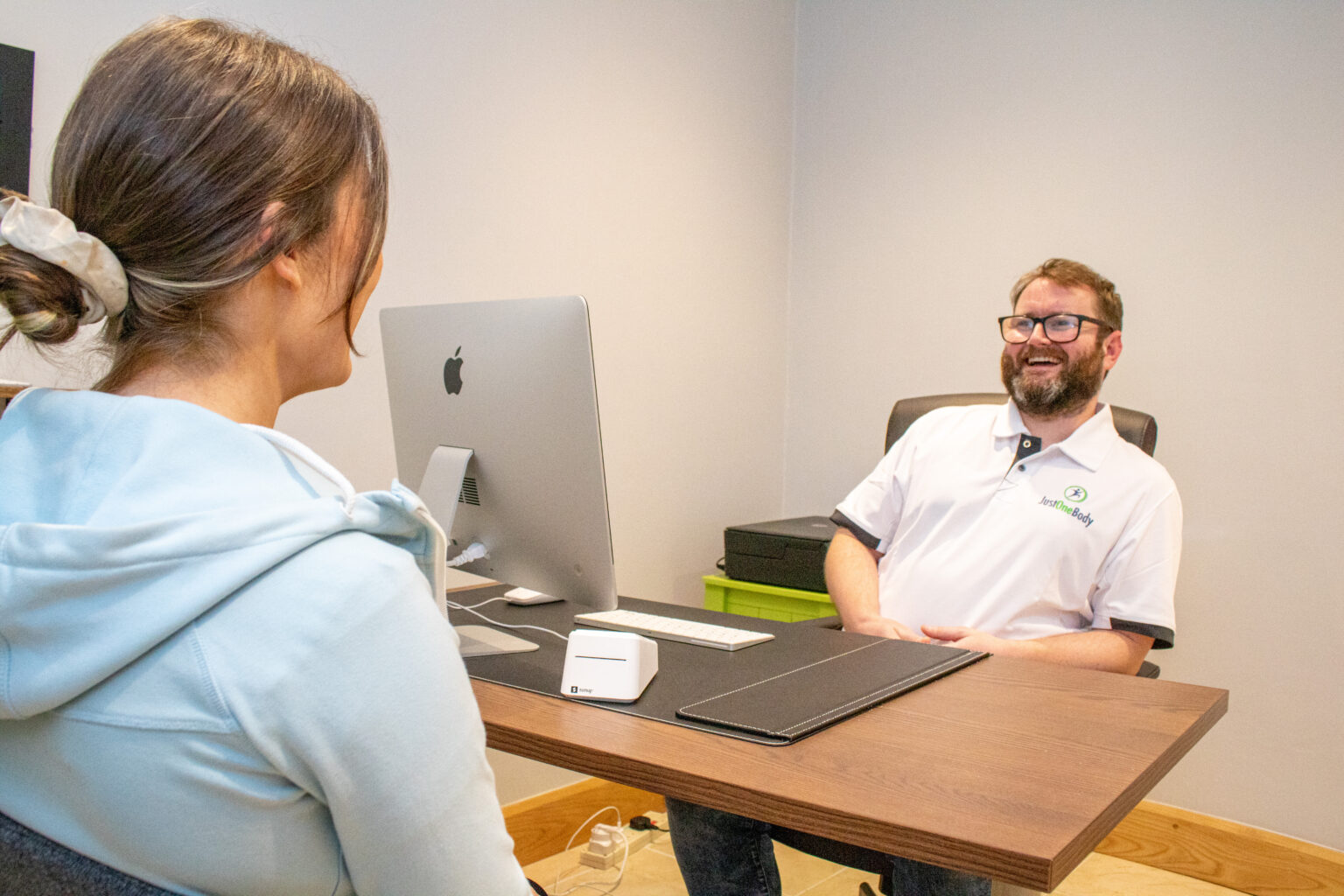
We review relevant health and fracture history, available DXA or FRAX information, strength, balance and movement. We then create and agree an exercise plan tailored to the person’s assessment and goals. Over 24 weeks, participants attend two supervised sessions each week, one-to-one or with no more than three people per trainer. We review progress at weeks 12 and 24.
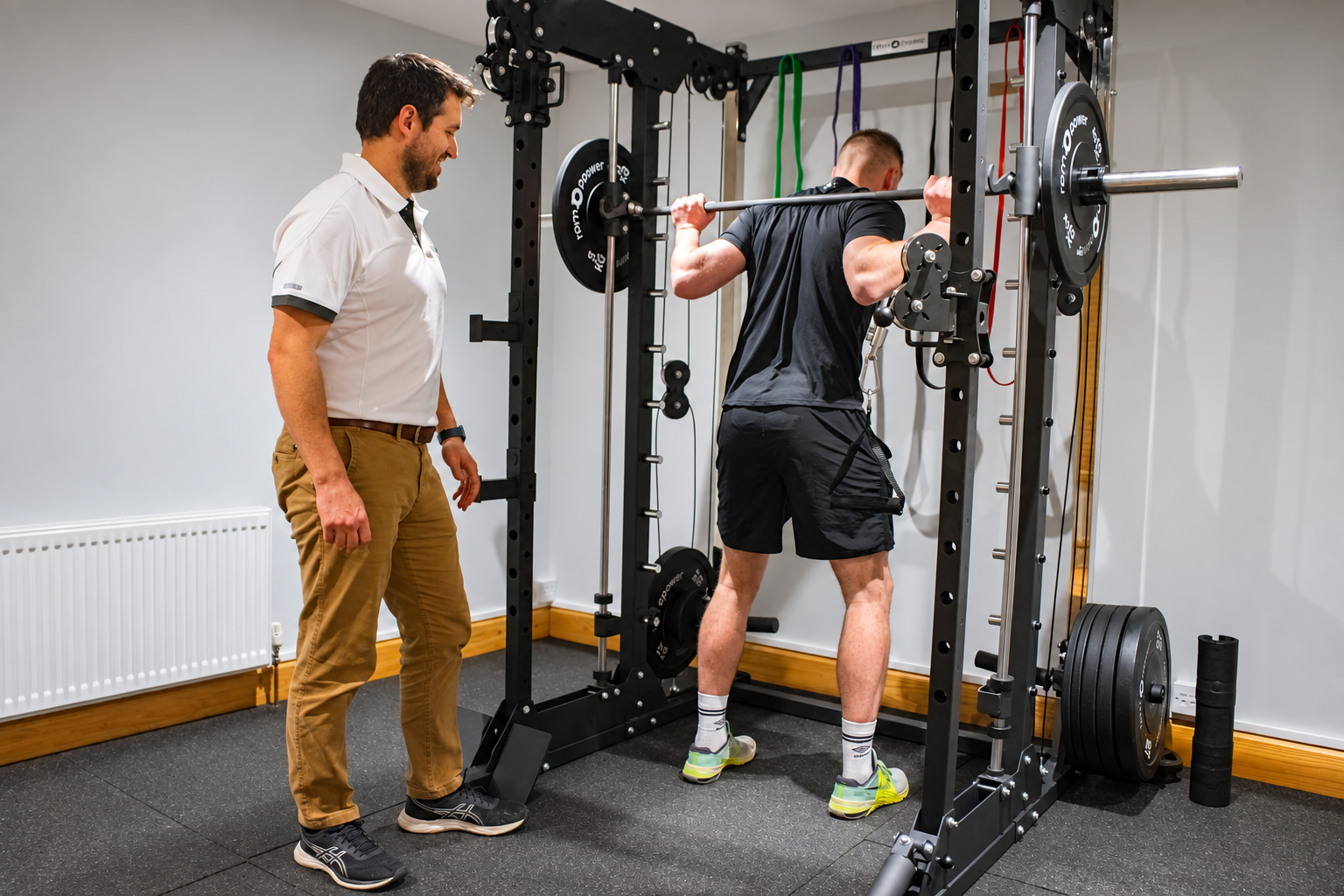
During sessions, the trainer checks technique, pain, fatigue, balance, confidence and how well the person tolerates the training. We adjust weight, range of movement, balance support, impact and pace in response to those observations, strength and balance results, and the person’s daily goals.
If new or worsening pain, a fall or another concern arises, our assessor or osteopath reviews it with the trainer. We may change or pause the exercise plan and seek GP input where medical assessment is needed. The GP remains responsible for medical investigation and treatment. With the participant’s consent, we can share relevant progress or concerns with their GP or referring trainer.
The referral pathway at a glance
A practical route from the first conversation to a plan for continuing exercise.
- 1
Refer
Share the reason for referral, relevant fracture or falls history, and any DXA report, FRAX result or exercise restrictions available.
- 2
Assess
We review the information and assess strength, balance and movement to set an appropriate starting point. Medical questions go back to the GP.
- 3
Train
Two supervised sessions each week build strength, balance and confidence. The trainer teaches and adapts the exercises as the person progresses.
- 4
Review
At weeks 12 and 24, we review progress and everyday goals, then discuss ongoing exercise and any need for medical follow-up.
What we look to improve
Progress is about how someone moves and manages daily life, as well as what we can measure in the clinic.
Health and physical measures
We look for changes in strength, balance and walking capacity. We also review relevant baseline measures such as blood pressure and resting heart rate, and share concerns with the GP when appropriate.
Daily activities
Each person chooses practical goals, such as getting up from a chair, climbing stairs, carrying shopping or walking further with confidence. Reviews check whether training is helping with those tasks.
Quality of life
We ask how confident the person feels moving, exercising and taking part in activities they value. Their own account of what has become easier matters alongside the physical tests.
These are aims we assess over time, not guaranteed results. Exercise complements GP assessment and any prescribed osteoporosis treatment.
Discuss the pathway
Book an introductory call with Kieran
If you have a patient or client in mind, book a 15-minute call with Kieran Lowe. You can discuss their needs, what to include in the referral, and how the programme would fit alongside their existing care.
Looking for information to share with a patient or client? View the public programme page.