
Most people who come into the clinic with pain are not sleeping well. Some can’t get comfortable. Some are up with young kids. Some are training late and lying awake afterwards. When I ask about sleep, the answer is usually a laugh and “not great”.
Sleep is the one thing we all get for free every night. It is when your body repairs, your mind resets and pain settles down. So I wanted to put together a plain guide: how much you need, what the different types of sleep do, what happens when you don’t get enough, and what you can actually do about it.
How much sleep do you need?
It changes a lot over a lifetime. These are the recommended amounts from the US National Sleep Foundation. The American Academy of Sleep Medicine and the HSE give very similar figures.
| Age | Sleep per 24 hours |
|---|---|
| Newborns (0–3 months) | 14–17 hours |
| Babies (4–11 months) | 12–15 hours, including naps |
| Toddlers (1–2 years) | 11–14 hours, including naps |
| Pre-school (3–5 years) | 10–13 hours |
| School age (6–13 years) | 9–11 hours |
| Teenagers (14–17 years) | 8–10 hours |
| Adults (18–64 years) | 7–9 hours |
| Over 65s | 7–8 hours |
One figure worth remembering. Sleep experts agree that six hours or less, night after night, is not enough for an adult to stay healthy.
Do men and women need different amounts?
There is no official advice that women need more sleep than men. On average, women sleep a little longer and get a bit more deep sleep. Yet they are more likely to say they sleep badly. Insomnia is about 40% more common in women.
Hormones play a big part. Many women sleep worse:
- in the days before a period
- during pregnancy, especially the last few months
- around perimenopause and menopause, with hot flushes and night sweats
Men are more likely to have sleep apnoea, where breathing stops and starts during the night. It becomes more common in women after 50. In women it often shows up as tiredness or low mood rather than loud snoring, so it gets missed.
Sleep through life
Early life
Babies spend a lot of their sleep in REM, the stage linked with brain development. Children need plenty of sleep for growth, learning and mood. Too little is linked with poor attention, more accidents and weight problems.
Teenagers are not just being lazy. Their body clock shifts later during adolescence, by around two hours. Early school starts and late-night phones mean a lot of teens are well short of the 8–10 hours they need.
Middle life
This is usually about fitting sleep around work, kids and everything else. Deep sleep also drops earlier than people expect. In one study of men, deep sleep fell from about 20% of the night in their early twenties to under 5% after their mid-thirties. For women, perimenopause can bring new sleep problems in the 40s and 50s.
Later life
Sleep gets lighter and more broken. It is normal to take longer to drop off, wake three or four times a night and wake earlier in the morning. But the need for sleep doesn’t go away. Over 65s still need around 7–8 hours.
The types of sleep: light, deep and REM
Through the night you go through cycles of about 90 minutes, four to six times. Each cycle has three types of sleep.
- Light sleep. The drifting-off stage, then a settled stage where your heart rate and breathing slow down. You spend about half the night here. If you wear an Apple Watch, this is what it calls “Core” sleep. It is not wasted sleep. It plays a part in memory too.
- Deep sleep. The most restorative stage, mostly in the first half of the night. This is when most growth hormone is released and your body repairs tissue, builds muscle and bone and supports your immune system. It’s the sleep that makes you wake up feeling refreshed.
- REM sleep. When most dreaming happens. Your brain is busy but your muscles are switched off. REM gets longer towards the morning. It is linked with learning, memory and dealing with emotions.
Two other things matter. Your body clock is set mainly by light, so morning daylight helps and bright screens at night don’t. And the longer you are awake, the more “sleep pressure” builds up.
If you cut sleep short night after night, you build up a sleep debt. In one well-known study, two weeks of six hours a night affected people’s thinking as much as one or two nights with no sleep at all. Most of them didn’t notice how much it was affecting them.
What happens when you don’t get enough?
In the short term you know the signs. Low mood, short temper, poor concentration, slower reactions. Being awake for 17–19 hours can slow your reactions as much as being at the drink-driving limit. Tiredness is a factor in up to one in five fatal crashes on Irish roads.
Regularly sleeping under seven hours is also linked with longer-term problems:
- weight gain and type 2 diabetes
- high blood pressure and heart disease
- low mood and depression
- a weaker immune system
Short studies show why. After just a couple of short nights, your hunger hormones shift, so you feel hungrier and crave sugary food. Your blood sugar control drops. People sleeping under six hours were about four times more likely to catch a cold when exposed to the virus.
Poor sleep makes pain worse
This is the part I see every week. Research shows one night of lost sleep lowers your pain threshold and turns up the pain areas in the brain. In one study, disturbing people’s deep sleep for a few nights made them noticeably more sensitive to muscle and joint pain.
Poor sleep predicts pain more strongly than pain predicts poor sleep. So if you have back pain, neck pain or an injury, getting your sleep right is part of your recovery. It is not an extra.
Missing deep sleep or REM
Losing deep sleep is most linked with waking up unrefreshed, more aches and pains and slower recovery. REM supports mood, learning and memory, although the research on losing REM on its own is less clear. Deep sleep comes early in the night and REM comes late. Cut either end short and you lose out.
How to get a better night’s sleep
- Get up at the same time every day, weekends included. Don’t lie in to make up for a bad night.
- Get daylight early. A short walk outside in the morning helps set your body clock.
- No caffeine for at least six hours before bed. Coffee six hours before bed can still cut your sleep by an hour without you noticing. That includes tea, cola, energy drinks and chocolate.
- Go easy on alcohol in the evening. It helps you nod off but breaks up your sleep later in the night.
- Put the phone away an hour before bed. Ideally keep it out of the bedroom.
- Keep the bedroom cool, dark and quiet. Around 16–20°C suits most people.
- Wind down. A shower, a book or some gentle stretching. If your mind is racing, write tomorrow’s to-do list before bed.
- Can’t sleep after 20 minutes? Get up, keep the lights low, do something calm and go back when you feel sleepy.
- Be active during the day, but avoid hard training and big meals in the last couple of hours before bed.
- Keep naps short, under 30 minutes and not late in the afternoon.
When to see your GP. If you have had trouble sleeping for more than a few weeks, if it is affecting your day, or if you or your partner notice loud snoring, gasping or pauses in breathing at night. Long-term insomnia is very treatable, usually with a talking therapy called CBT-I rather than sleeping tablets.
Sleep for athletes
A lot of the people I treat play sport, from underage GAA to club runners. Sleep is the cheapest performance tool you have, and the one most people ignore.
A 2021 expert consensus in the British Journal of Sports Medicine treats regularly sleeping under seven hours as not enough for athletes. It recommends tailoring sleep to each athlete, and many experts believe athletes in heavy training need more than the usual 7–9 hours.
What poor sleep does to performance
- Skills and decisions drop first. Reaction time and accuracy suffer after short nights, even when strength holds up.
- More injuries. In one study of teenage athletes, those sleeping under eight hours were about 1.7 times more likely to get injured.
- More illness. Short sleep makes colds and chest infections more likely, which means missed sessions.
- Slower recovery. Deep sleep is when your body does most of its repair after training.
The good news. When Stanford University basketball players aimed for 10 hours in bed for several weeks, their sprint times got faster and their shooting accuracy went up by around 9%.
Sleep tips for athletes
- Bank sleep before big games. Most players sleep badly the night before a match because of nerves. Don’t worry about that one night. Get extra sleep in the nights leading up to it.
- Use short naps. 20–30 minutes in the early afternoon tops you up without affecting your night.
- Plan for evening training and night games. Adrenaline and late food can keep you awake. Have a set routine after: shower, food, lights down, phone away.
- Watch the caffeine. Pre-training coffee or energy drinks in the afternoon or evening can cut into your sleep without you feeling it.
- Use trackers as a guide, not a judge. Watches can’t measure sleep stages perfectly, and worrying about your score can make sleep worse.
- Travelling to compete? Give yourself time. Jet lag takes about a day per time zone to settle.
Summary
Most adults need seven to nine hours. Children and teenagers need more. Over 65s still need seven to eight. Each type of sleep has its own job, from the repair work of deep sleep to the learning and mood reset of REM. Short-changing your sleep affects your mood, your health, your performance and how much pain you feel.
Small habits make a real difference. Get up at the same time, get morning daylight, cut back on late caffeine and give yourself time to wind down. If you play sport, treat sleep as part of your training.
How we can help you sleep better
Two things keep most of our patients awake:
Both can be helped. Here’s how.
1 Less pain at night
If pain wakes you when you turn over, or you can’t find a comfortable position, the first step is finding out why. We assess what’s going on, treat it with hands-on treatment and give you exercises to keep it settling. Less pain during the day usually means less pain at night.
A few things that help in the meantime:
- Turn as one piece. If your back is sore, bend your knees, tighten your tummy and roll your shoulders and hips together, like a log. Use your arms to push yourself up when getting out of bed rather than sitting straight up.
- Use pillows to take the strain. On your side, put a pillow between your knees. On your back, put one under your knees. With a sore shoulder, lie on the other side and hug a pillow so the arm is supported.
- Get your pillow height right. Your neck should sit level with your spine, not tipped up or dropping down.
- Heat for stiffness. A hot water bottle or wheat bag for 15–20 minutes before bed can ease stiff muscles. Use hot, not boiling, water, always use a cover, and don’t fall asleep lying on it. Skip heat on a fresh injury or numb skin.
- Painkillers, used properly. If you need them, take them as directed on the label. Ask your pharmacist or GP which one suits you and the best time to take it so it helps you through the night. Don’t rely on them long term without getting the problem looked at.
2 Less stress, better sleep
Stress keeps your body on alert. Your heart rate stays up, your mind keeps going and it takes longer to drop off. Taking time to switch off during the week makes a real difference at night.
- Relaxing massage. Swedish and Indian head massage are a chance to slow down, ease tension in your neck and shoulders and relax.
- Deep tissue and sports massage. For tight, overworked muscles that leave you sore and restless.
- Energy healing with Saol Holistics. A gentle, calming treatment for people who want time out.
- Counselling. If worry or stress is keeping you awake, talking it through can help. Avril Rothwell, an integrative counsellor and psychotherapist, works independently from our clinic.
Services that can help
Pain or an injury keeping you awake?
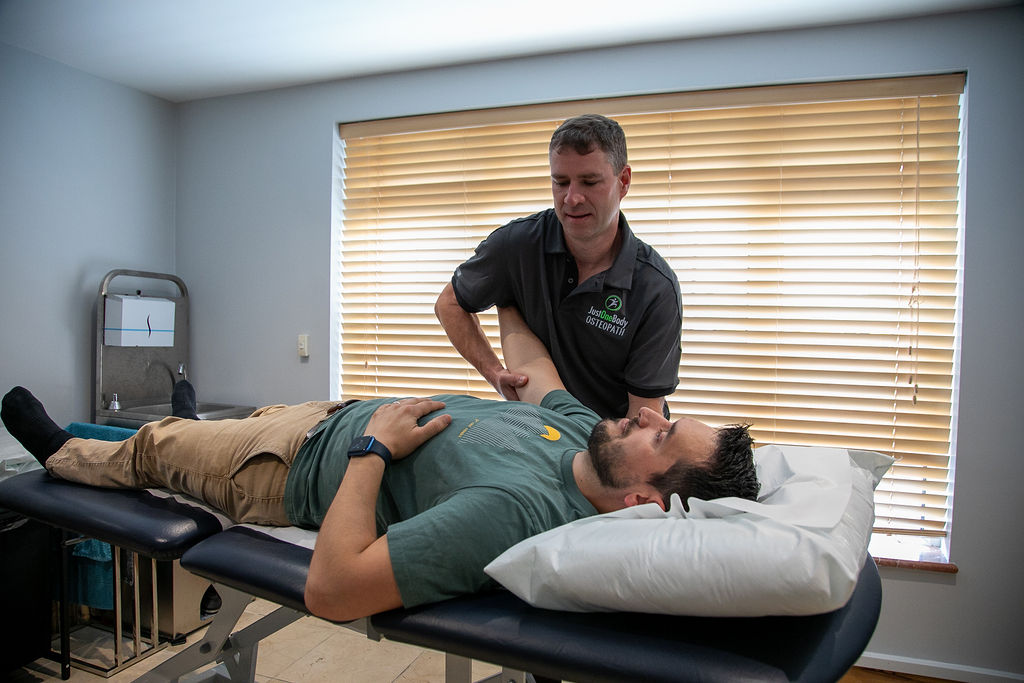
If pain is stopping you sleeping, or poor sleep is slowing your recovery, come and talk to me. Book a free 15-minute consultation at Just One Body in Raheen, New Ross. We’ll go through what’s going on and how we can help. No obligation.
This article is general information, not medical advice. If you have ongoing sleep problems, please speak to your GP.
Sources
- Hirshkowitz M et al. (2015). National Sleep Foundation’s sleep time duration recommendations. Sleep Health. thensf.org
- Watson NF et al. (2015). Recommended amount of sleep for a healthy adult. American Academy of Sleep Medicine. aasm.org
- HSE. Sleep problems. hse.ie
- NHS. Insomnia. nhs.uk
- Zhang B, Wing YK (2006). Sex differences in insomnia: a meta-analysis. Sleep.
- US Office on Women’s Health. Insomnia. womenshealth.gov
- National Institute of Neurological Disorders and Stroke. Brain basics: understanding sleep. ninds.nih.gov
- Van Cauter E et al. (2000). Age-related changes in slow wave sleep and REM sleep. JAMA.
- Van Dongen HPA et al. (2003). The cumulative cost of additional wakefulness. Sleep.
- Krause AJ et al. (2019). The pain of sleep loss. Journal of Neuroscience. jneurosci.org
- Finan PH, Goodin BR, Smith MT (2013). The association of sleep and pain. Journal of Pain.
- Prather AA et al. (2015). Behaviorally assessed sleep and susceptibility to the common cold. Sleep.
- Road Safety Authority. Driver fatigue. rsa.ie
- Walsh NP et al. (2021). Sleep and the athlete: 2021 expert consensus recommendations. British Journal of Sports Medicine. bjsm.bmj.com
- Mah CD et al. (2011). The effects of sleep extension on the athletic performance of collegiate basketball players. Sleep.
- Milewski MD et al. (2014). Chronic lack of sleep is associated with increased sports injuries in adolescent athletes. Journal of Pediatric Orthopaedics.
- Drake C et al. (2013). Caffeine effects on sleep taken 0, 3, or 6 hours before going to bed. Journal of Clinical Sleep Medicine.