Conditions We Treat

How Our Therapists Help with Pain and Movement

Explore the conditions we treat and assess at Just One Body in New Ross. Our therapists explain what may be contributing to your symptoms and plan care that can include hands-on treatment, movement advice and simple exercises. Use the links below to find an area of the body. If you are unsure where to start, learn about our appointments. For independent health information, see the HSE Health A to Z.

Conditions We Treat by Body Area

Headaches

Common concerns: Tension-type headaches can feel like pressure or a tight band around the head. Cervicogenic (neck-related) headaches are linked with neck issues and often start at the base of the skull, sometimes worsening with neck movement or long desk days. We also ask about migraine symptoms, which may need a different approach.
Woman holding her forehead, illustrating headache symptoms
How we help: We assess neck movement and possible triggers, then use gentle hands-on care where suitable. Simple neck mobility, upper-back exercises, movement breaks and relaxation exercises can help manage recurring symptoms. A sudden, severe or unusual headache needs medical assessment.

Jaw Issues

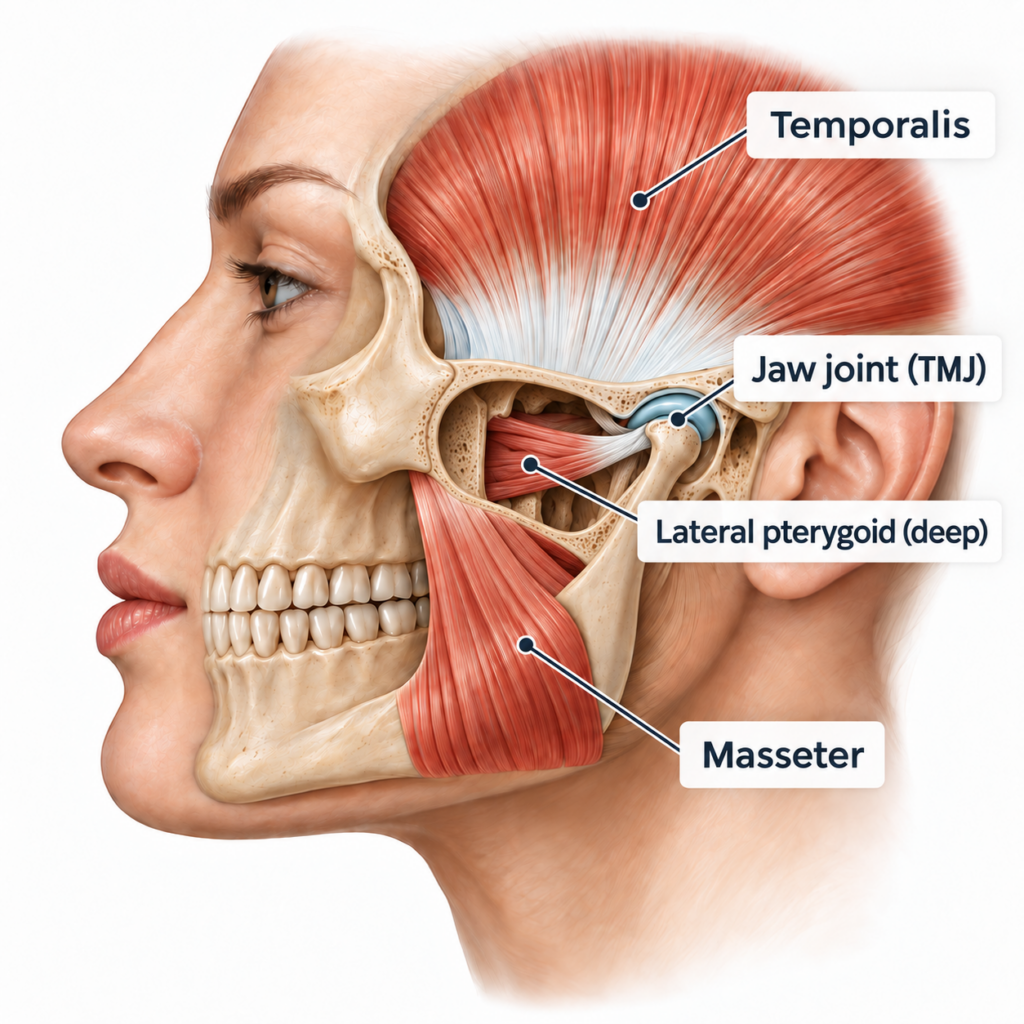
Common concerns: Jaw joint and chewing-muscle problems can cause pain with eating or yawning, clicking, temple headaches or difficulty opening the mouth. Clenching and grinding may add to muscle soreness; some people notice locking or ear discomfort. Clicking without pain does not always mean something is wrong.
Jaw anatomy labelled temporalis, jaw joint, deep lateral pterygoid and masseter
How we help: We assess jaw opening, the neck and habits that aggravate symptoms. Care may include gentle hands-on work around the jaw and neck, advice on relaxed jaw positioning and small, controlled opening exercises. Locking, tooth pain or persistent ear symptoms may need a dentist or GP.

Dizziness & Tinnitus

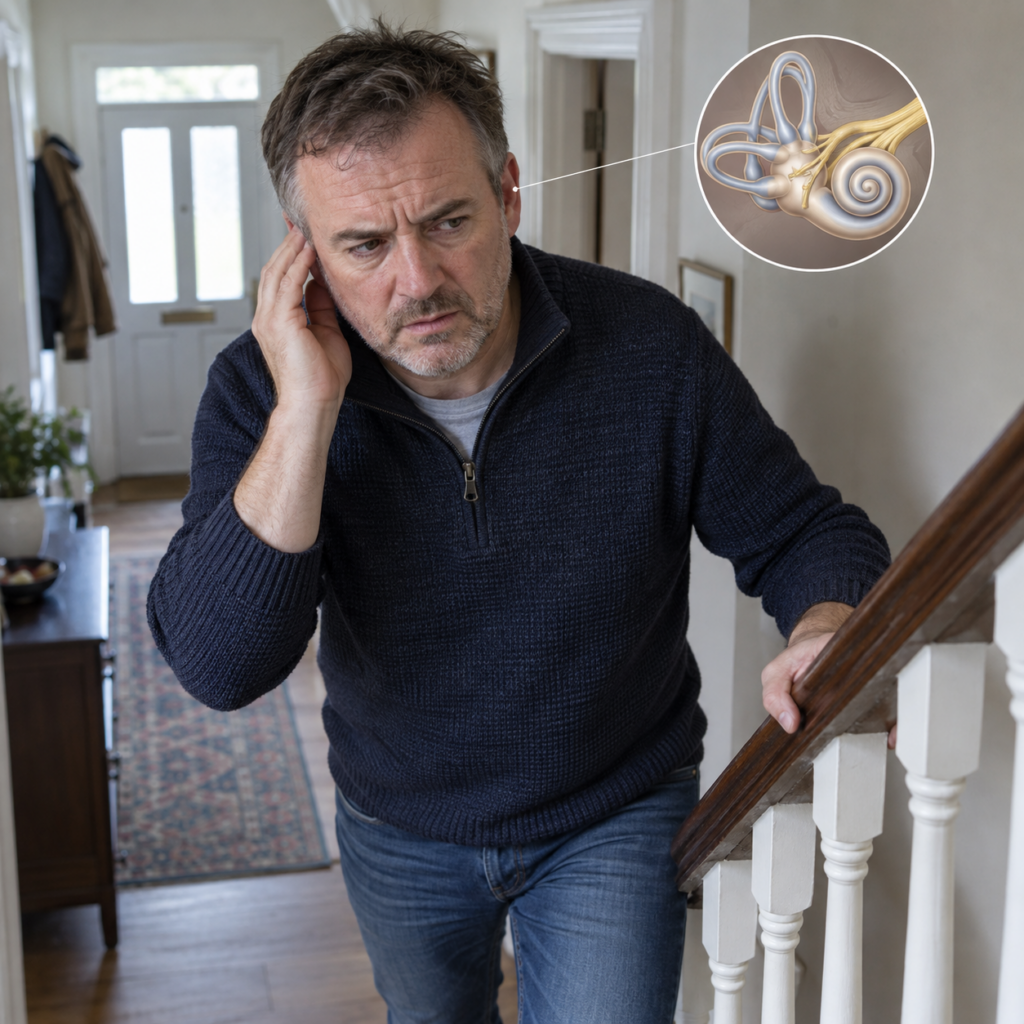
Common concerns: Dizziness can feel like spinning, light-headedness or unsteadiness, and has many possible causes, including inner-ear problems. Tinnitus means hearing ringing, buzzing or another sound without an outside source. Hearing changes and some medical conditions need assessment beyond muscle and joint care.
Man steadying himself on a stair rail while touching his ear; inner-ear inset illustrates balance and hearing structures
How we help: We discuss and examine symptoms, including when they start and whether hearing has changed. If neck or jaw stiffness is also present, we may support movement and give individual exercises. We advise GP, hearing or balance assessment when needed; sudden hearing loss needs prompt medical help.

Neck pain

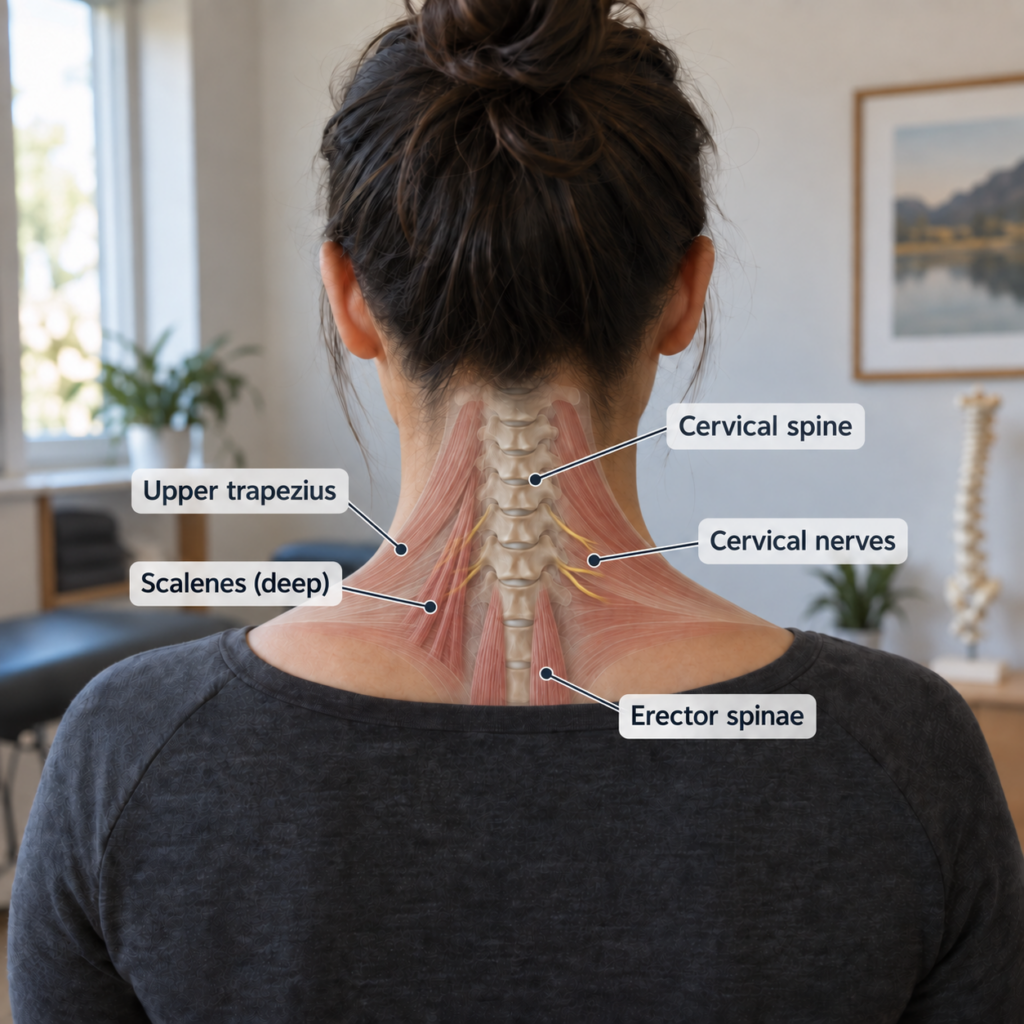
Common concerns: Stiff joints, sensitive muscles, disc issues or nerve irritation can cause neck pain, sometimes with symptoms into the shoulder, upper back or arm. Pain may follow a strain, long screen time or a whiplash injury. Tingling, numbness or weakness helps us decide which structures and nerve signs to check.
Posterior neck anatomy showing cervical spine, upper trapezius, deep scalenes, erector spinae and cervical nerves
How we help: We examine neck and shoulder movement and perform nerve tests when arm symptoms call for them. Hands-on treatment may help comfort and movement, alongside short movement breaks and gentle neck mobility. We then guide gradual neck and shoulder strengthening for longer-term confidence. New or worsening arm weakness needs medical review.

Shoulder pain

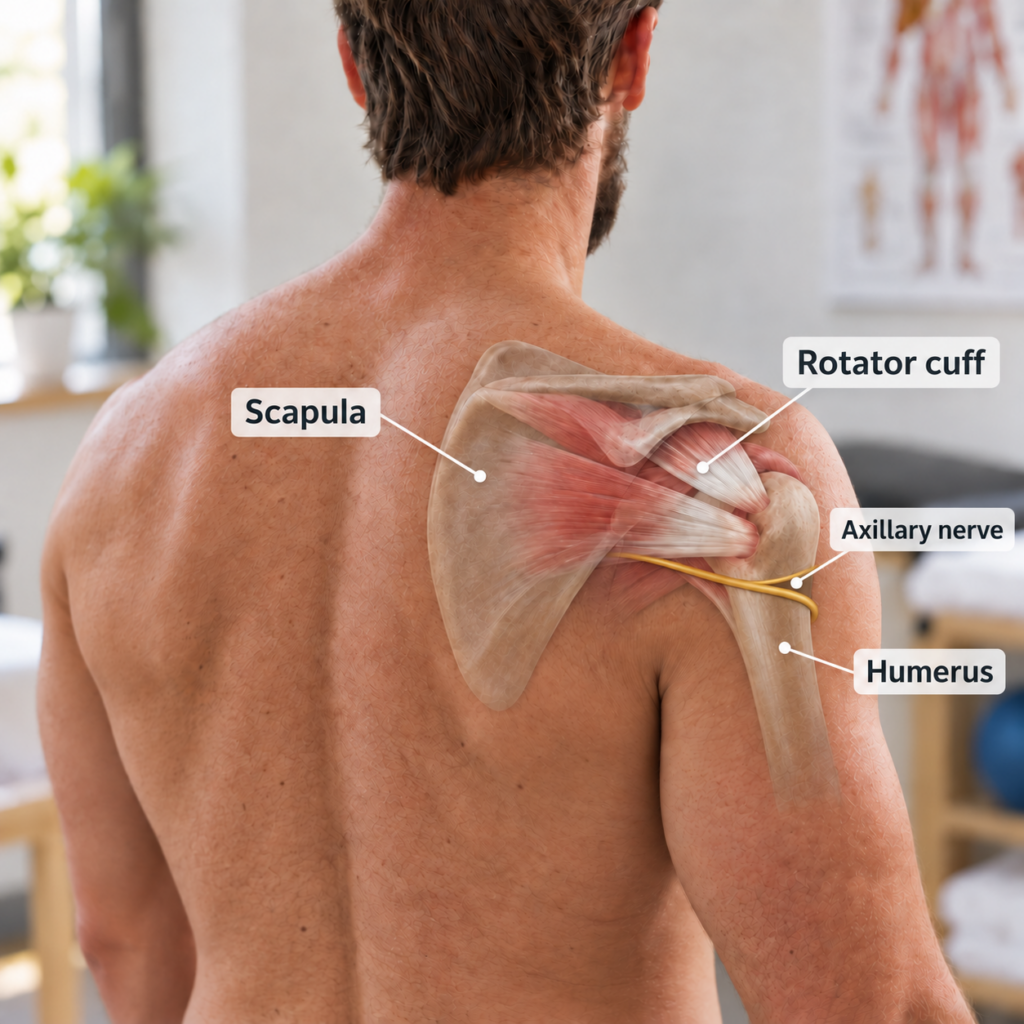
Common concerns: Irritated rotator cuff tendons, ligament injury or joint and cartilage issues can make reaching out and lifting difficult. A frozen shoulder causes marked stiffness, while an injury at the top of the shoulder may hurt across the body. Sometimes shoulder pain is referred from the neck.
Bare shoulder with labelled scapula, rotator cuff, humerus and axillary nerve
How we help: We use shoulder movement and orthopaedic tests to explore what is causing pain, and check the neck when appropriate. A combination of suitable hands-on treatment, gentle movement and gradual rotator cuff and shoulder-blade strengthening can help you get moving well again. We adjust lifting or sport loads as you recover.

Arm & Elbow pain

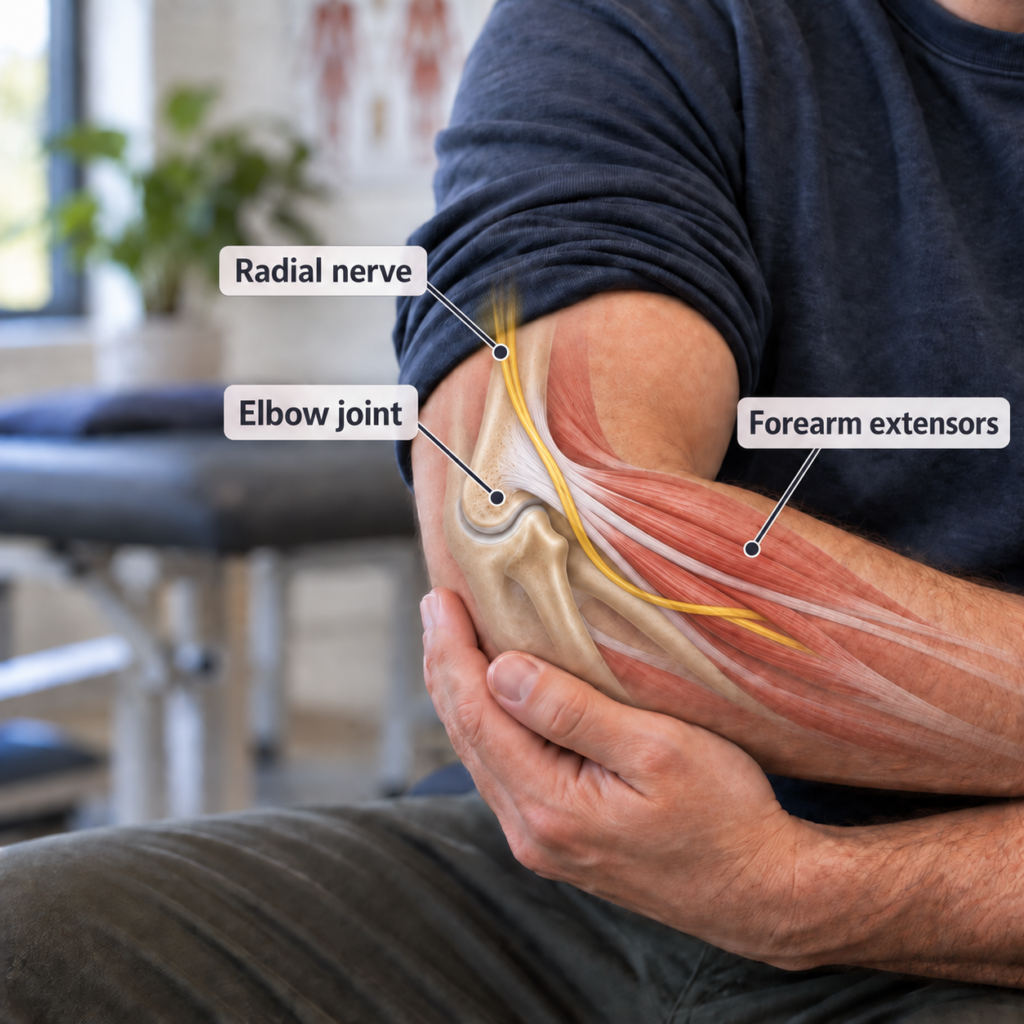
Common concerns: Tennis elbow usually hurts on the outside of the elbow; golfer’s elbow affects the inside. Repeated gripping, lifting or tool use can irritate these tendons, and office workers can develop similar overuse symptoms. Muscles and nerves may also contribute, especially when pain travels or tingles.
Outer elbow anatomy showing the elbow joint, forearm extensor muscles and radial nerve
How we help: We look at the activities that trigger symptoms and test grip, elbow movement and, when needed, the neck and nerves. Hands-on treatment may help sore tissues while we adjust aggravating loads. We build forearm and grip strength gradually, with exercise guidance or videos to support practice at home.

Wrist, Hand & Finger pain

Common concerns: Strains, finger pulley injuries, irritated tendons and stiff joints can affect the wrist or hand and make gripping difficult. Thumb-side tendon pain is common with repeated use. Tingling or night-time numbness may point to nerve involvement, including possible carpal tunnel syndrome.
Rock climber gripping an indoor climbing hold with a bent arm
How we help: We assess hand and arm function, grip, sensation and the activities that bring symptoms on. Care may include ways to adjust activity, gentle wrist and finger movement, tendon glides and gradual grip exercises. If symptoms suggest carpal tunnel syndrome, we can refer for orthopaedic review.

Chest & Rib pain

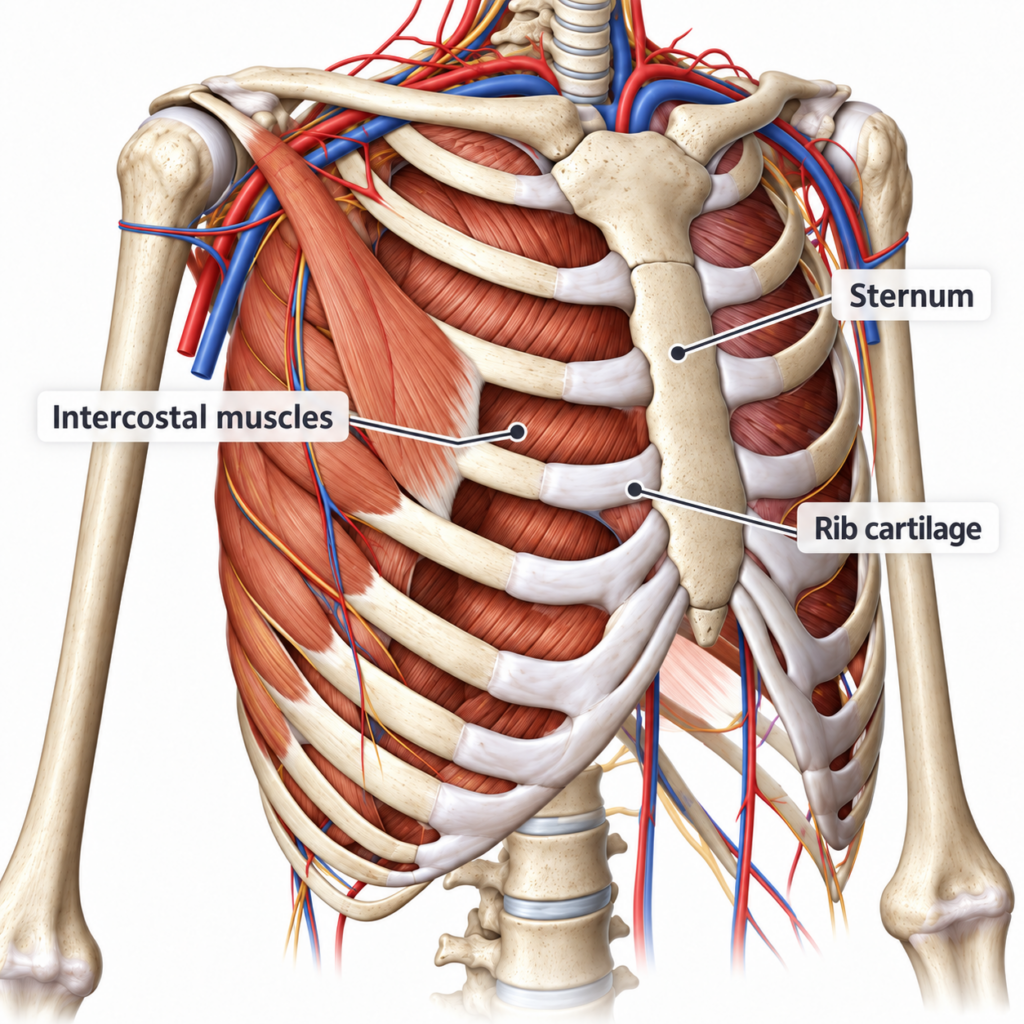
Common concerns: Chest-wall muscles, rib joints or costochondritis can hurt with twisting, reaching, coughing or a deep breath. Screening for medical issues is important here because chest pain can also come from the heart or lungs, especially when other symptoms occur.
Chest wall anatomy labelled sternum, rib cartilage and intercostal muscles
How we help: We assess carefully and refer for medical care when needed. For suitable muscle or rib pain, gentle treatment, upper-back mobility, breathing and movement exercises may help you move more comfortably. Sudden chest pain, especially with breathlessness, sweating or pain spreading to the arm or jaw, needs urgent medical help.

Mid & Low back pain

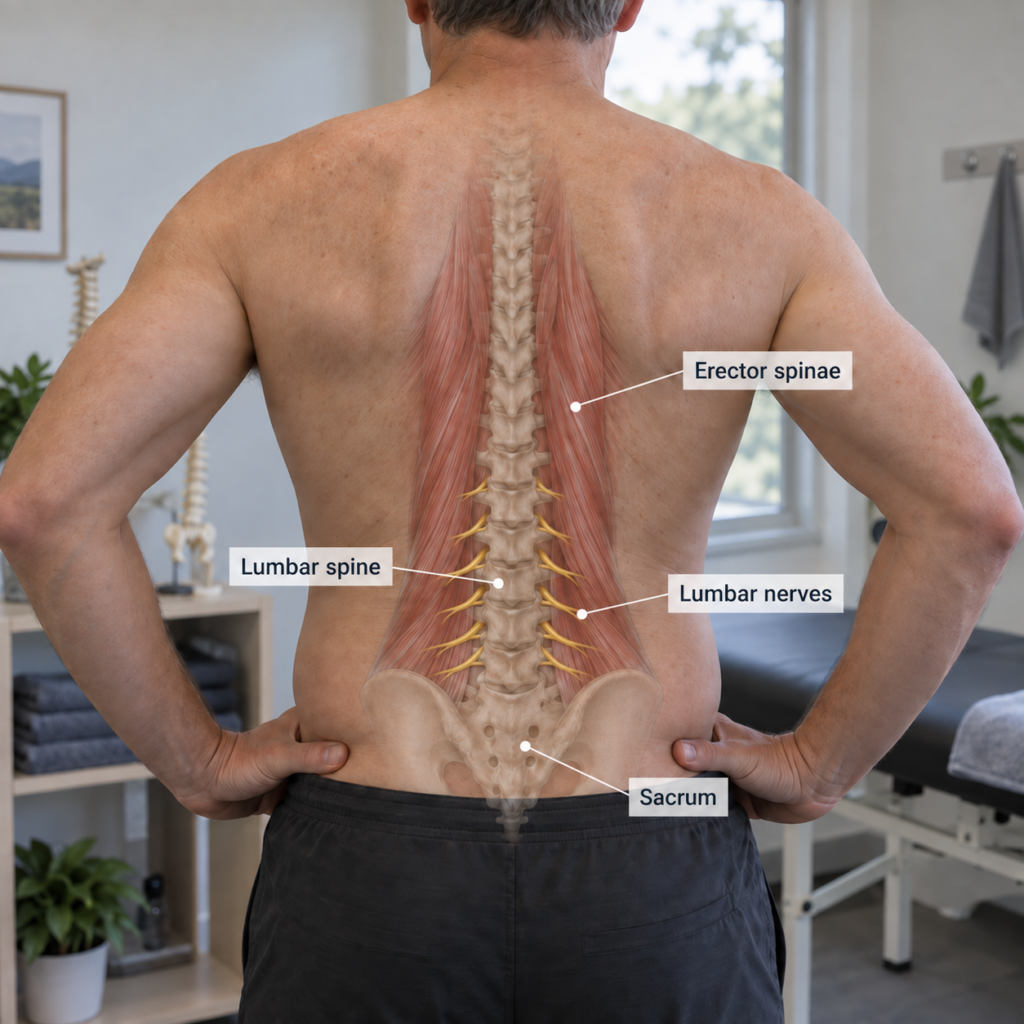
Common concerns: Back pain is the most common issue we treat. It may involve disc or joint problems, a muscle strain or sensitivity that builds over time. Mid-back stiffness can limit turning; low-back pain can make bending, sitting, lifting or walking uncomfortable and may spread into the buttock.
Person with lower back anatomy overlay labelled lumbar spine, erector spinae, lumbar nerves and sacrum
How we help: A good assessment helps us understand the pattern and plan recovery. We explore which movements and everyday tasks ease or aggravate pain, then combine suitable treatment with education and practical activity changes, especially in the early stages. Exercise can progress from walking and mobility to bending, lifting and strength work.

Sciatica

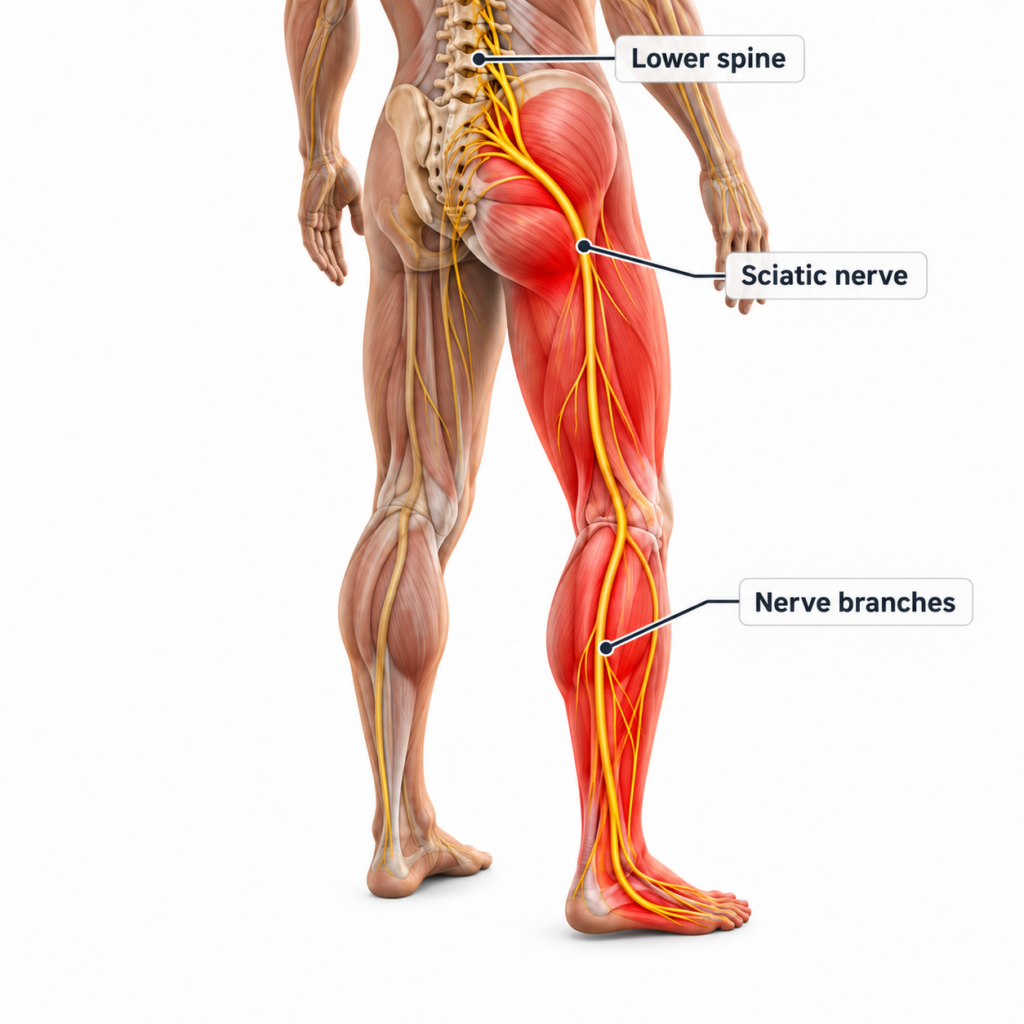
Common concerns: Sciatica is nerve-related pain that travels from the lower back or buttock down a leg, sometimes below the knee. Tingling, numbness or weakness may also occur. Leg pain is not always sciatica, so we check the symptom pattern and nerve signs.
Sciatic nerve anatomy labelled lower spine, sciatic nerve and nerve branches
How we help: We check symptoms, strength and sensation, then help you find comfortable ways to move and guide gradual exercise. Hands-on treatment can help in some cases, but not all; the plan may include short walks and gentle nerve-friendly movement. New bladder or bowel changes, or numbness around the groin, need urgent medical care.

Pelvis & Groin issues

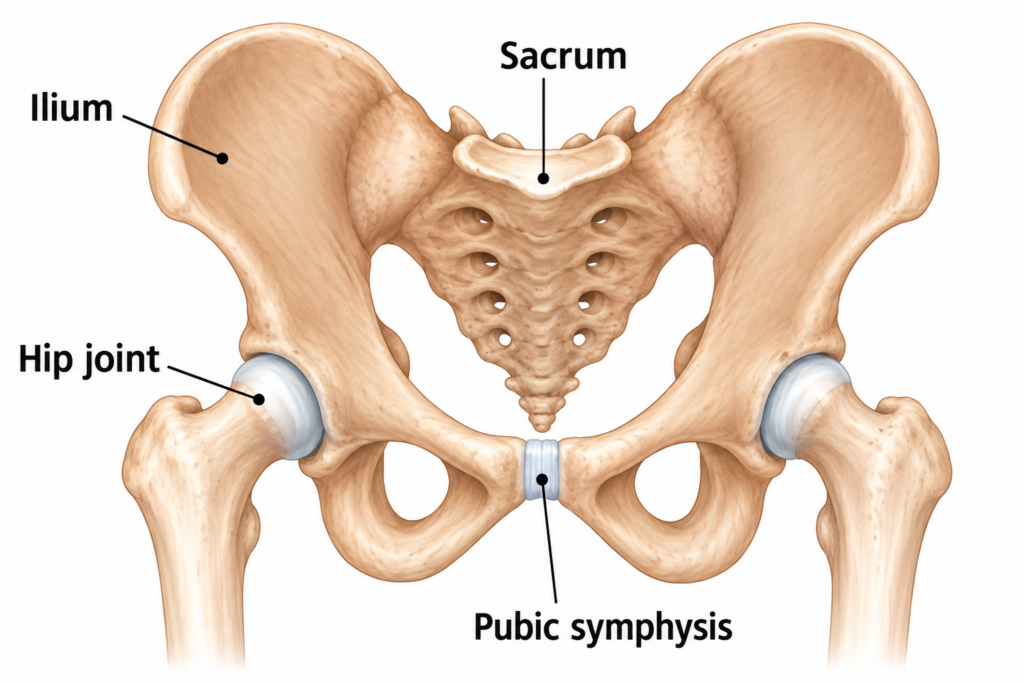
Common concerns: Groin or pelvic-area pain may come from hip muscles, tendons or joints, the sacroiliac area or the lower back. Adductor strains may hurt with sport or squeezing the legs together. Pelvic discomfort can also occur during pregnancy and after birth, so care needs to suit that stage.
Pelvis diagram labelled ilium, sacrum, hip joint and pubic symphysis
How we help: We assess relevant joints and tissues, hip and back movement, and what aggravates or relieves symptoms. A balance of suitable hands-on treatment and exercise may include hip mobility, adductor strength and pelvic-control work. Severe or unexplained pelvic pain needs medical review.

Hip problems

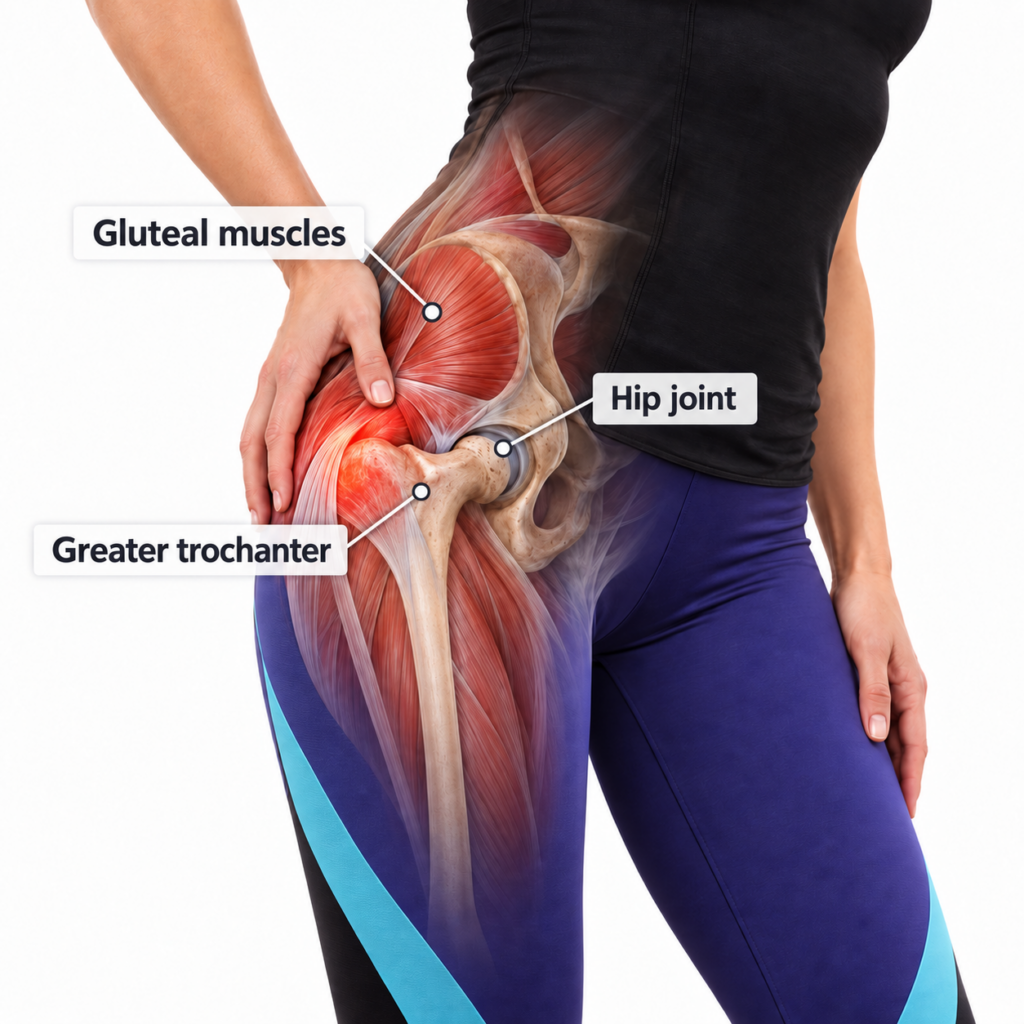
Common concerns: Groin pain and stiffness may come from the hip joint, including osteoarthritis. Pain on the outside of the hip can involve gluteal tendons and may be worse on stairs or when lying on that side. Hip flexor irritation and referred back pain can feel different again.
Hip anatomy labelled hip joint, greater trochanter and gluteal muscles
How we help: We assess hip range, walking and the activities that load the sore area. We may use hands-on care for comfort, suggest practical changes to walking or sleeping positions, and build hip strength with exercises such as sit-to-stands and side-step work.

Leg & Knee pain

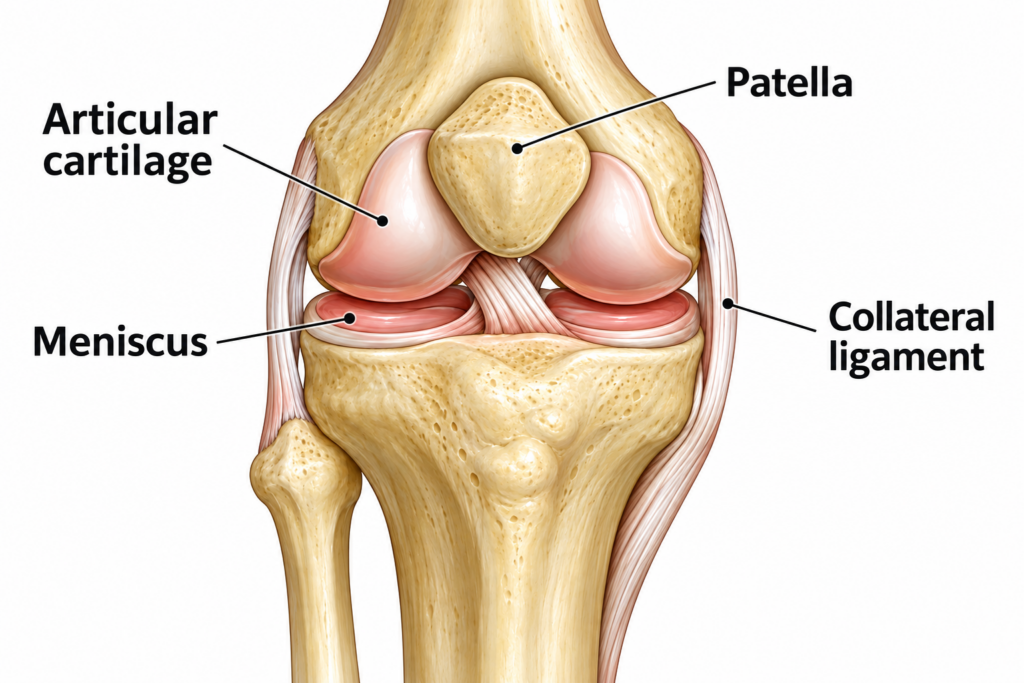
Common concerns: Pain around the kneecap often shows up on stairs or with squats. Tendon pain may follow running or jumping, while arthritis can bring stiffness and swelling. A twist can irritate a meniscus; some leg pain may start in the back rather than the knee.
Knee joint diagram labelled patella, cartilage, meniscus and collateral ligament
How we help: We check walking, stairs, squatting and knee strength, then choose exercises that fit the problem. These may progress from comfortable knee movement to step-ups, thigh and calf strength and balance work. A locked knee or major swelling after injury needs medical assessment.

Ankle, Foot & Toe pain

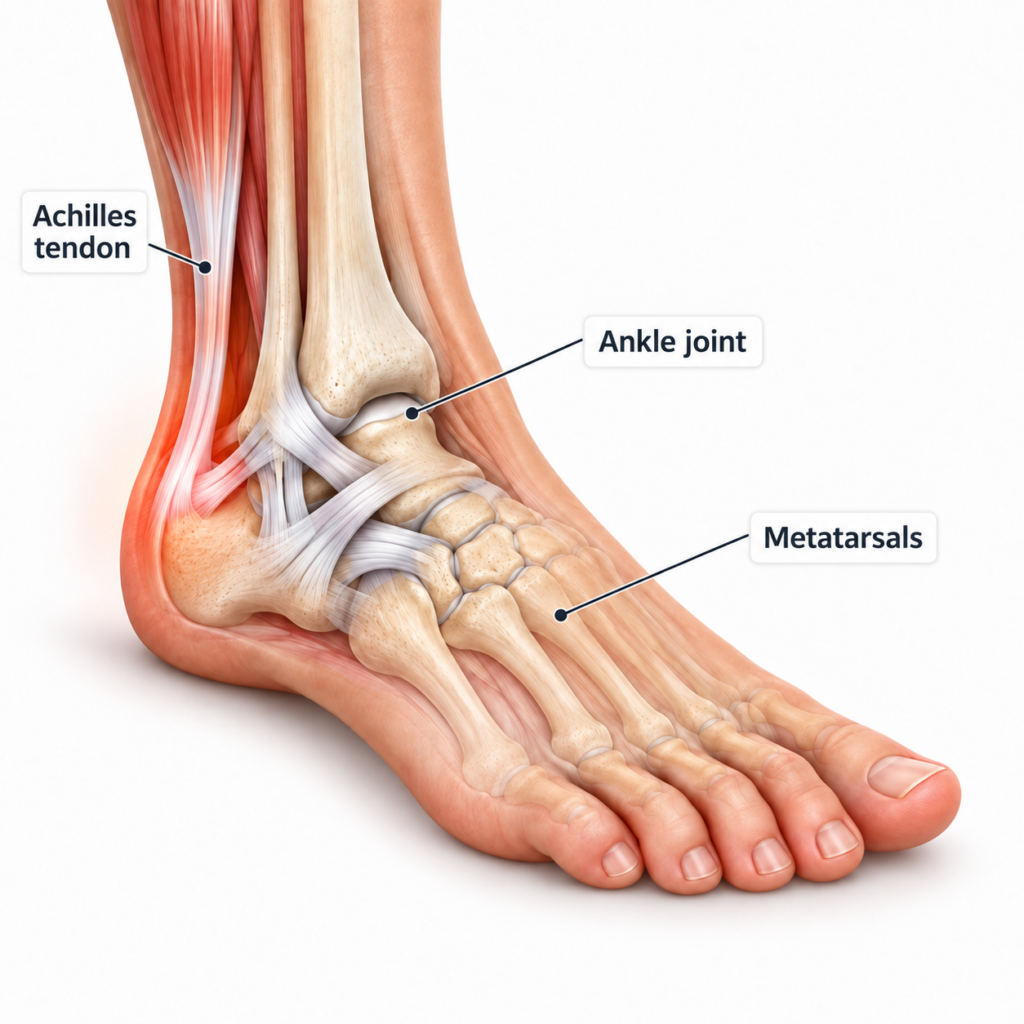
Common concerns: An ankle sprain can leave swelling and reduced confidence on uneven ground. Achilles tendon pain is often sore with running or stairs; plantar heel pain is commonly sharp on the first steps after rest. Stiff big-toe joints can change how you walk.
Foot and ankle anatomy labelled Achilles tendon, ankle joint and metatarsals
How we help: We assess walking, ankle motion, calf strength and balance. Depending on the problem, care may include advice on activity and footwear, hands-on treatment, calf raises, balance drills and a gradual return to walking or sport. Severe pain after injury or trouble bearing weight needs medical assessment.